
Do Guinea Pigs Need a Pet Sitter? Daily Needs Most Owners Miss
Most people think guinea pigs are easy pets to leave alone for a weekend until subtle problems start building quietly in the background. This article explores the daily care needs many owners underestimate, why guinea pigs hide stress so well, and what experienced pet sitters actually watch for while owners are away.
Jadzia Dietrich
5/8/20263 min read
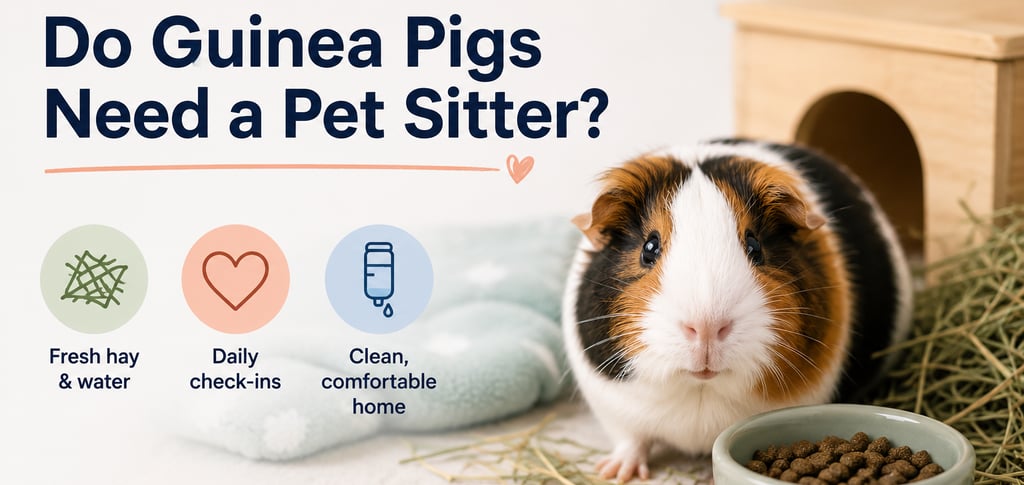
Do Guinea Pigs Need a Pet Sitter? Daily Needs Most Owners Miss
Most people think guinea pigs are easy pets to leave alone for a weekend. Fill the hay rack, refill the water bottle, leave enough pellets behind, and everything should be fine until Monday.
The reality is usually quieter than that.
Guinea pigs rarely make it obvious when something starts going wrong. A guinea pig may still walk over for vegetables while already eating less hay throughout the day. Another may drink less water but continue acting mostly normal from a distance. By the time the change becomes noticeable, the problem has often been building quietly in the background.
That is one reason experienced guinea pig care matters more than many owners expect.
The Quiet Problem With Guinea Pigs
Dogs usually show stress loudly. Guinea pigs often do the opposite.
Some become quieter during feeding time. Others spend longer sitting inside hideouts or stop reacting as excitedly to routines they normally recognize immediately. Small behavioral shifts are usually the first sign that something feels off.
Long-time guinea pig owners notice how attached these animals become to consistency. They recognize feeding schedules, sounds in the house, cleaning routines, and even the timing of floor time or vegetables.
When owners suddenly leave, several small changes happen at once. The house sounds different. Feeding timing shifts slightly. Interaction changes. Cleaning routines may become inconsistent. Even unfamiliar smells or noise levels can affect them more than people realize.
For bonded pairs, stress can sometimes subtly change their behavior toward each other too. One guinea pig may begin hovering around food areas more often or taking over preferred resting spots. These changes are easy to miss unless someone is paying close attention daily.
Hay and Water Issues Build Faster Than Expected
Most owners know guinea pigs need unlimited hay, but fewer realize how dependent they are on constant grazing throughout the day.
Hay is not just part of their diet. It supports digestion, gut movement, and dental health continuously. A hay rack running low overnight matters more than many people think.
Water bottles are another commonly overlooked issue. Bottles can clog silently while still appearing full from the outside. Sometimes the nozzle slows down or sticks without being obvious immediately.
Good guinea pig care is less about simply refilling supplies and more about noticing patterns.
An experienced sitter notices when vegetables are left untouched longer than usual. Or when one guinea pig hangs back during feeding instead of rushing over immediately. Sometimes the earliest warning sign is simply that they seem slightly less active than normal.
Those tiny details are often the important ones.
Why Guinea Pigs Hide Illness So Well
One of the hardest parts of guinea pig ownership is that they instinctively avoid appearing weak.
As prey animals, hiding discomfort is part of their survival behavior. In the wild, visible weakness attracts predators. Even domesticated guinea pigs still carry those instincts, which means illness often looks subtle at first.
Many owners expect dramatic symptoms, but early warning signs are usually quiet. A guinea pig may eat slower, move less during active hours, or spend more time sitting in one area. Some become less interested in hay before owners notice anything else has changed.
To someone unfamiliar with guinea pig behavior, these changes may seem minor. To an experienced small pet sitter, they stand out immediately because they break the animal’s normal routine.
That difference matters.
Cleanliness Impacts Comfort More Than People Realize
Another thing owners often underestimate is how quickly guinea pig enclosures change throughout the day.
An enclosure that looked freshly cleaned in the morning can already contain damp bedding areas, scattered hay, leftover vegetables, and heavily used corners by evening, especially in bonded pairs. Since guinea pigs spend nearly all their time close to the ground, enclosure conditions directly affect their comfort.
Regular spot cleaning is not just about appearance. It helps maintain a drier, cleaner, less stressful environment while also making it easier to monitor health and behavior changes early.
Small pets tend to rely heavily on environmental stability. Tiny disruptions that seem unimportant to humans often matter much more to them.
Why Many Owners Choose Specialized Guinea Pig Care
Many pet sitting services mainly focus on dogs and cats, with guinea pigs listed as an additional option. But guinea pig owners are usually looking for something more specific.
They want someone who understands routine-based animals. Someone who notices behavioral changes, monitors hay and water intake carefully, keeps enclosures consistently clean, and understands that quiet behavior changes can sometimes mean more than obvious ones.
Good guinea pig care feels calm, observant, and consistent.
For owners looking for guinea pig boarding or drop-in care in Silver Spring, Ensure PetCare provides personalized small pet care focused on low-stress handling, attentive daily monitoring, and maintaining stable routines while owners are away.
Because with guinea pigs, the smallest changes are often the ones worth paying attention to.
Copyright © 2026 Ensure PetCare, LLC ®. All rights reserved.
Get in Touch: lena@ensurepetcare.com
Hewitt Ave, Silver Spring, Maryland 20906